

What We Do
In Pharmaceutical Manufacturing, the Air Is Part of the Product
Airborne particulate contamination in a drug manufacturing environment does not just pose a risk to workers — it poses a direct risk to product integrity, batch outcomes, and regulatory standing. A single contamination event can trigger a recall, a failed inspection, or an FDA warning letter that takes years and millions of dollars to resolve.
prePaer adds a continuous ULPA filtration layer at the room level — capturing airborne particles, microbial contaminants, and active pharmaceutical ingredient (API) dust before they can compromise product quality or exceed occupational exposure limits for manufacturing personnel.
The Regulatory Reality
GMP Compliance Requires Demonstrable Air Quality Control at Every Stage of Manufacturing
FDA 21 CFR Part 211 and EU GMP Annex 1 set explicit requirements for environmental monitoring, particulate limits, and microbial contamination control in pharmaceutical manufacturing areas. Meeting these requirements is not a one-time achievement — it is an ongoing operational commitment that must be documented, monitored, and maintained across every production run. prePaer supports that commitment by providing continuous active filtration at the manufacturing room level, complementing validated HVAC systems with an additional source-control layer that reduces the ambient particle burden throughout the working shift.
Where Airborne Particles Threaten Product Quality and Worker Safety
Our Solution: The prePaer AER System
Our Solution: The prePaer AER System
prePaer is freestanding and requires no HVAC integration or facility modification. It deploys alongside existing validated environmental controls, adding a room-level source-control filtration layer that operates continuously throughout the manufacturing shift — reducing the ambient airborne particle burden that monitoring programs measure and regulators inspect.
The prePaer AER System
A Continuous Filtration Layer for Every Stage of the Manufacturing Process
ULPA Filtration at 0.12 Microns — Pharmaceutical Grade:
prePaer’s proprietary ULPA filter captures 99.999% of particles at 0.12 microns — the same filtration standard used in ISO-classified cleanrooms and hospital isolation suites. This threshold addresses API dust, microbial carriers, and fine particulate matter well below the sizes that standard HVAC filters retain.
Supports Environmental Monitoring Compliance:
By continuously reducing the ambient particle load in manufacturing areas, prePaer supports lower baseline particulate counts during environmental monitoring sampling — reducing the frequency of excursion events that require GMP deviation documentation and investigation.
Occupational Exposure Limit (OEL) Support for API Handling:
Positioning prePaer adjacent to weighing stations, blending equipment, and other API-handling operations reduces the airborne API concentration in the worker’s immediate breathing zone — supporting OEL compliance as part of a broader industrial hygiene program.
No HVAC Modification — Preserves Validated Systems:
Modifying a validated HVAC system in a GMP environment requires revalidation — a costly and time-consuming process. prePaer operates independently as a supplemental room-level control, adding filtration capability without touching the validated environmental control infrastructure.
Portable Between Manufacturing Areas:
prePaer can be repositioned between production areas, staging zones, and material handling areas based on where API exposure and contamination risk are highest during any given production campaign — making it a flexible resource across the full manufacturing floor.
Worker Safety & OEL Compliance
Protecting the People Who Handle Active Pharmaceutical Ingredients Every Day
Manufacturing personnel who work with potent APIs face occupational exposure risks that accumulate across every shift, every campaign, and every year of a career. Engineering controls — closed systems, local exhaust ventilation, and containment isolators — address the highest-risk operations. prePaer addresses the ambient air in the broader manufacturing environment where residual API dust and other particles circulate between those primary controls.
A layered approach to occupational exposure control is both good industrial hygiene practice and a regulatory expectation. prePaer fits naturally into that framework as the room-level active filtration layer that reduces background airborne concentrations throughout the working shift.
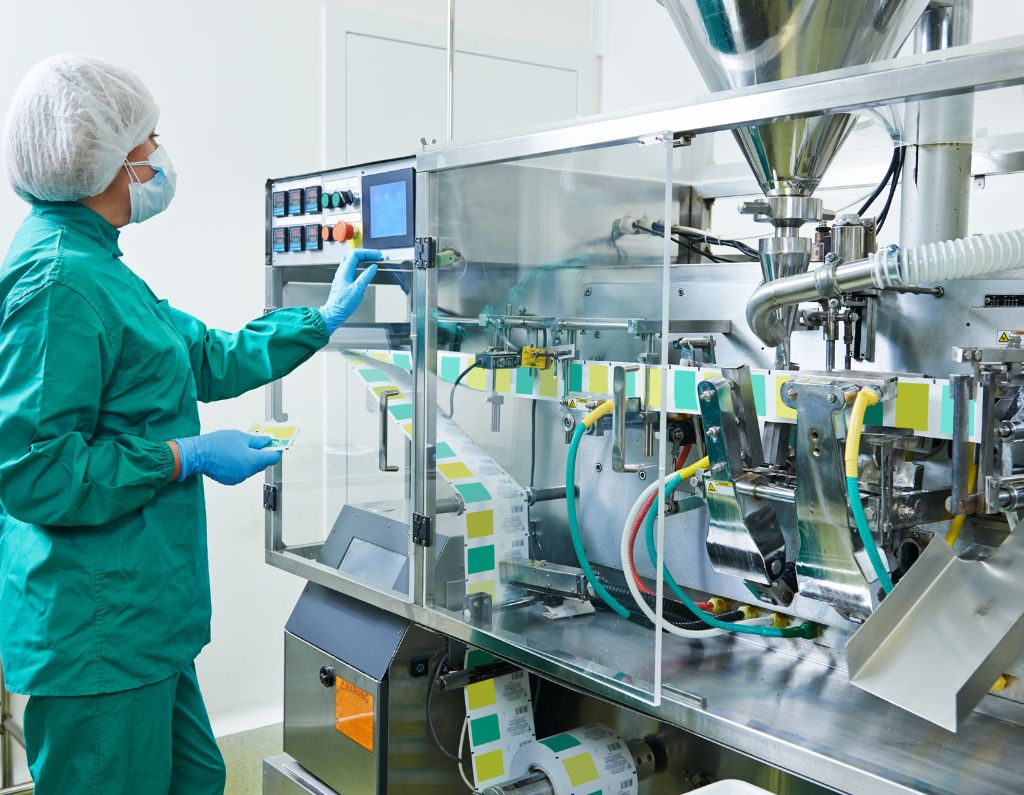
Contamination Prevention Is Always Cheaper Than Contamination Response
A single batch rejection due to particulate contamination represents the cost of materials, labor, equipment time, investigation, documentation, and corrective action — in addition to the supply impact of lost product. An FDA 483 observation or warning letter tied to environmental control deficiencies carries costs that extend far beyond the immediate remediation effort.
prePaer is a practical, cost-effective addition to the environmental control framework of any pharmaceutical manufacturing facility — reducing the ambient particle burden that monitoring programs measure, supporting OEL compliance for manufacturing personnel, and demonstrating the continuous improvement commitment that regulators expect to see documented in quality management systems.