

What We Do
A Café Brings People Together — and So Does Every Airborne Pathogen That Enters It
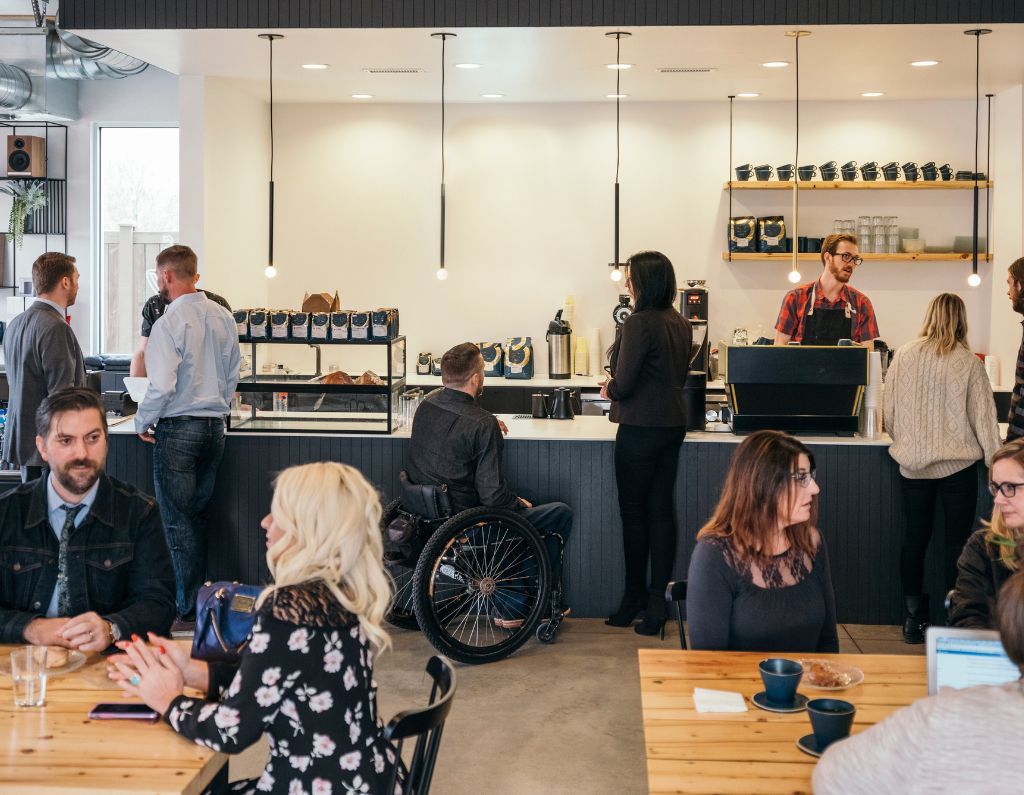
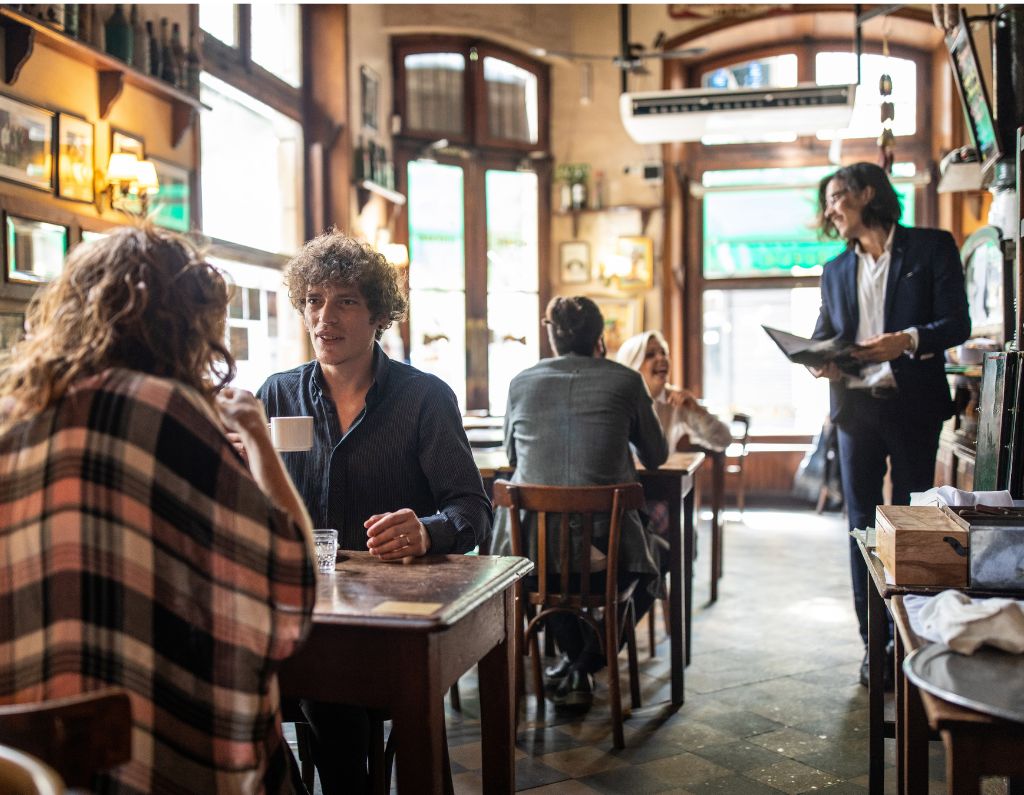
Cafés and food service venues concentrate unmasked customers in enclosed spaces for extended dwell times — often 30 minutes to several hours per visit. Each person present contributes respiratory aerosols to the shared air from the moment they walk in. The queue, the counter, and the seating area are all zones of sustained close-proximity aerosol exposure in the same enclosed environment.
prePaer provides continuous ULPA-grade air filtration at the room level — reducing the airborne pathogen and allergen load for staff who are present all day and for the customers who choose to spend time in the space — and giving café owners a tangible, visible air quality measure to communicate to their community.
The Indoor Dining Air Quality Challenge
Food Service Staff Are Among the Most Consistently Exposed Workers in Any Airborne Transmission Environment
Café and food service staff interact with dozens to hundreds of customers per shift — each interaction a brief but repeated close-proximity aerosol exposure event across a full working day. Unlike customers who visit once and leave, staff accumulate that exposure across every shift, every week. Standard café HVAC provides general air circulation and temperature management but was not designed to address the respiratory aerosol transmission risk generated by continuous high-turnover customer interaction in an enclosed space. prePaer reduces the ambient airborne pathogen load continuously throughout the service period — providing the room-level source-control filtration that ventilation alone cannot deliver.
What Accumulates in Café Air From Opening to Close


Our Solution: The prePaer AER System
Our Solution: The prePaer AER System
prePaer is freestanding and immediately deployable — position it on the service floor, behind the counter, or in the seating area based on where customer density and dwell time are highest. No installation, no HVAC modification, operational the same day it arrives.
The prePaer AER System
Active Air Filtration for the Service Floor, the Counter, and the Seating Area
ULPA Filtration Captures Respiratory Aerosols at 0.12 Microns:
The fine aerosol particles that carry influenza, COVID-19, and RSV range from 0.1 to 1 micron — below the capture threshold of standard café HVAC filters. prePaer’s ULPA filter removes 99.999% of particles at 0.12 microns, continuously reducing the airborne pathogen concentration in the occupied space throughout the entire service period.
Counter Protection for Front-of-House Staff:
Positioning prePaer behind or adjacent to the service counter provides continuous source-control filtration in the zone where staff have the most frequent and sustained close-proximity contact with customers. This is where cumulative daily aerosol exposure is highest for counter staff throughout a full shift.
Seating Area Air Quality for Extended Dwell Customers:
Customers who occupy café tables for extended periods both generate and accumulate aerosol exposure over time. A prePaer unit in the seating area continuously filters the air that seated customers breathe during their visit — reducing the ambient concentration that builds up when multiple customers are present simultaneously in an enclosed space.
No Ozone — Safe for Food Service Environments:
Ozone can interact with food aromas and introduce off-notes into the sensory environment of a café or restaurant. prePaer uses no ozone technology — the filtration is purely mechanical, leaving the coffee aroma, food smells, and café atmosphere entirely unaffected while removing airborne particles from the space.
A Visible Health Commitment That Customers Notice:
Post-pandemic, a meaningful proportion of customers — particularly those with allergies, asthma, or compromised immunity — actively factor indoor air quality into where they choose to spend time. A café with visible, active air filtration signals that it takes the health of its community seriously — a differentiator that builds loyalty among the customers who notice it most.
Community Trust
The Café That Cares About Its Community’s Health Builds the Deepest Loyalty
Cafés are community spaces — not just transaction points. The relationship between a café and its regulars is built on trust, familiarity, and the sense that the space genuinely serves the people who use it. In a post-pandemic environment where many customers remain more aware of indoor air quality than they were before 2020, a café that visibly invests in the health of its space communicates something about its values that straightforward product quality cannot.
For cafés in communities with high proportions of elderly, immunocompromised, or health-conscious customers — or near healthcare facilities, schools, or retirement communities — active air quality measures are not just a nice gesture. They are a meaningful part of what makes the space accessible and welcoming to people who would otherwise stay away.
The Best Cafés Are Places People Return To — Clean Air Is Part of Why
Customer loyalty in the café industry is built on a combination of product quality, atmosphere, and the intangible feeling of being in a space that feels good. Clean, fresh air — the absence of the staleness that accumulates in high-occupancy enclosed environments — is part of that feeling, even when customers cannot name it specifically.
prePaer provides that quality continuously and invisibly — without changing anything about how the café operates, what it smells like, or how staff interact with customers. It is simply the infrastructure choice that makes the air in the space measurably better, every service, every day.