

What We Do
The Moment You Disturb Mold, the Air Becomes the Hazard
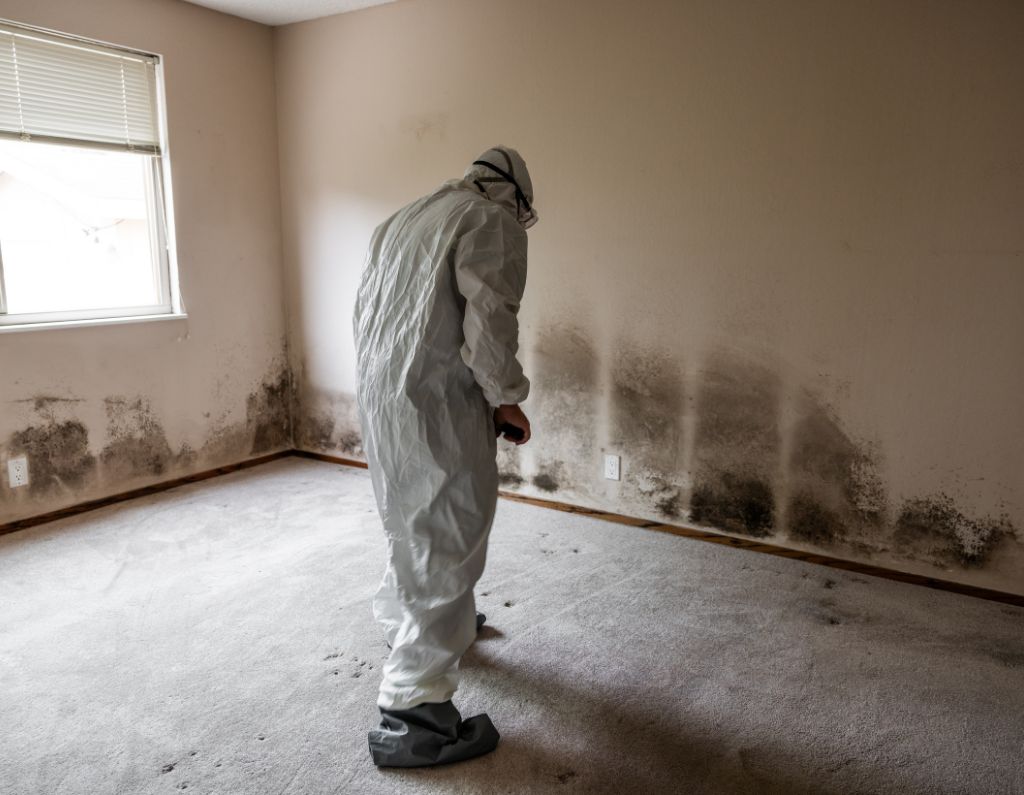
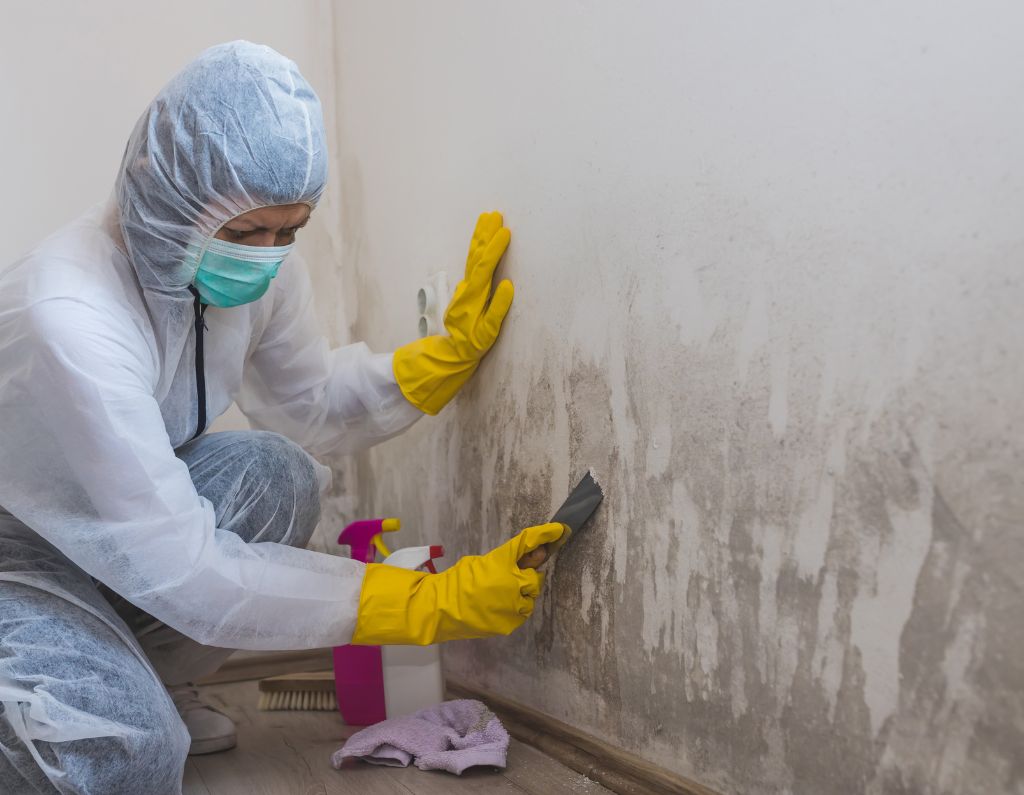
Mold colonies release spores passively, but the act of removing mold — cutting drywall, pulling insulation, scrubbing surfaces — dramatically amplifies spore release into surrounding air. Within seconds of starting work, spore concentrations in the room can reach levels that make the air itself a respiratory hazard for anyone present.
prePaer captures those spores at 0.12 microns, continuously, throughout the remediation process — reducing the airborne load that crews breathe, and preventing the cross-contamination that can spread a contained mold problem throughout an entire building.
The Scale of the Problem
Containment Plastic Redirects Air. It Does Not Filter It.
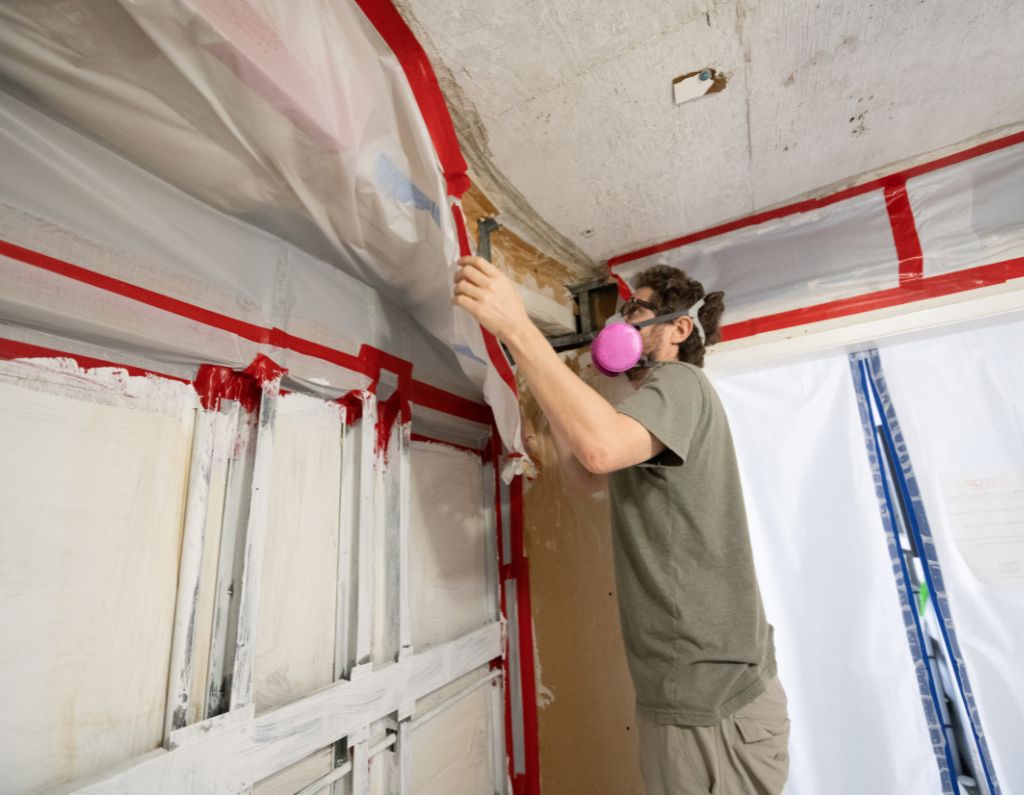
Negative pressure containment and plastic sheeting are standard practice on remediation jobs — but they address pressure differentials, not airborne particle concentrations. The air inside a containment zone can reach extremely high spore counts during active demolition. Crew members wearing respirators are protected when the seal is perfect, but ambient spore levels remain high. prePaer addresses the air volume itself, reducing spore concentration inside the work zone in real time throughout every phase of the job.
Consider This: What Happens in the Air During Active Remediation
What Your Crew — and the Building — Is Exposed to From the First Cut
Our Solution: The prePaer AER System
Our Solution: The prePaer AER System
prePaer is portable, freestanding, and operational before the first cut is made. Run it inside the containment zone throughout demolition, material removal, and the drying phase. Its CADR 500+ capacity handles the high particle loads generated during active remediation without slowing down your crew’s workflow.
The prePaer AER System
Active Spore Filtration Throughout Every Phase of the Job
ULPA Capture at 0.12 Microns — Spores, Fragments, and Toxin Carriers:
prePaer’s proprietary ULPA filter captures 99.999% of particles at 0.12 microns and larger. This encompasses the full range of mold spores, hyphal fragments, and the fine particles that carry mycotoxins — removing them from the air volume continuously throughout the remediation process.
CADR 500+ — Built for High Particle Load Environments:
Active demolition generates particle loads far above what standard room air purifiers handle. prePaer’s high Clean Air Delivery Rate is specifically suited to environments where spore concentrations spike rapidly and require continuous high-volume filtration to keep pace.
Complement to Negative Air Machines — Not a Replacement:
NAMs create negative pressure to prevent contaminated air from escaping the work zone. prePaer filters the air within that zone. The two serve different but compatible functions — deploying both provides substantially stronger protection than either alone in high-severity remediation jobs.
Deployable at the Containment Boundary:
Position a second unit at the containment zone access point to filter air near the exit. This reduces spore migration each time workers pass in and out, protecting adjacent unaffected areas from cross-contamination throughout the duration of the project.
Plug-In, Job-Site Ready — No Installation Required:
prePaer requires no setup, no permits, and no infrastructure. Load it in the van, carry it to the job site, plug it in, and it is protecting the space before work begins. It moves from project to project as part of your standard remediation equipment.
Business Value
A Better Job Outcome Starts With Cleaner Air During the Job
Remediation businesses that deploy active air filtration during jobs are better positioned on every dimension that matters to clients and insurers: crew safety documentation, lower cross-contamination risk, cleaner post-remediation air tests, and a credible answer when property owners ask what protective measures are in place during the work.
prePaer is a piece of equipment that earns its place on every job — reducing liability exposure, supporting clearance test outcomes, and differentiating your company from competitors who rely on containment and PPE alone.
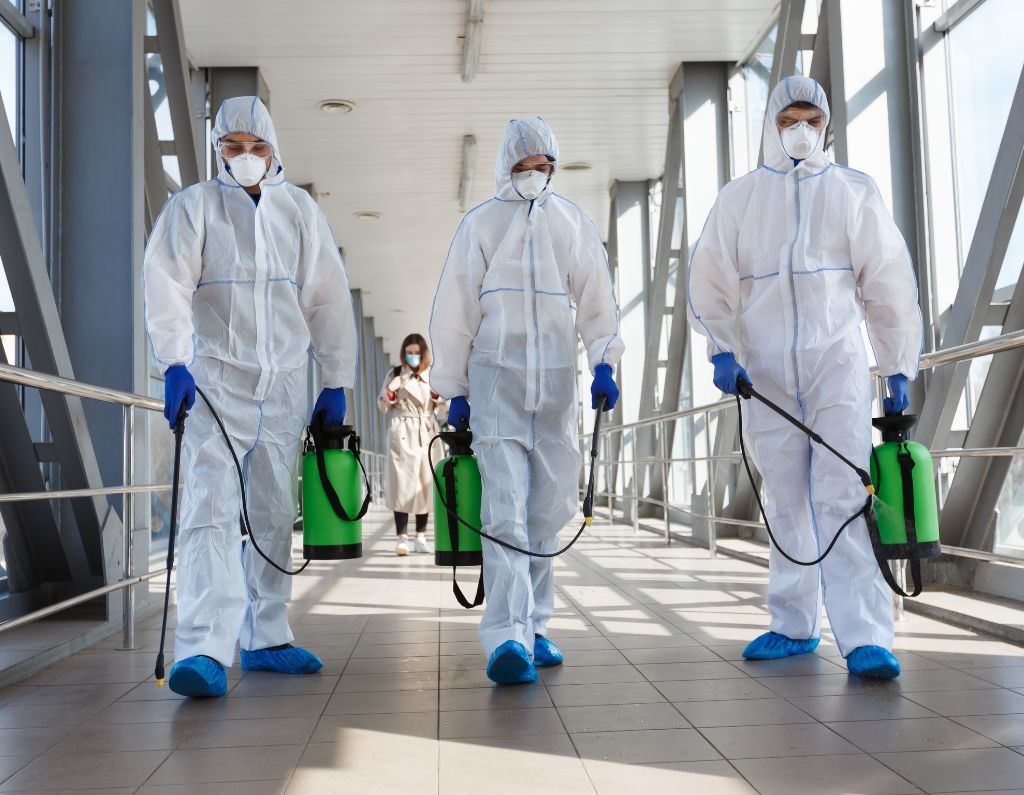
Protecting the Building, the Crew, and the People Who Return
Mold remediation is a high-stakes service. Property owners trust you to remove a health hazard without creating a secondary one. Active air filtration throughout the job is the operational practice that closes that gap — demonstrating to clients, insurers, and inspectors that contamination was managed at every phase, not just at the containment boundary.
prePaer fits naturally into IICRC-aligned remediation protocols as the air management layer within the work zone — a straightforward addition that strengthens your documentation, supports your crew’s health, and contributes to outcomes you can stand behind.